

The Problem: Multiple File Formats, One Database, Zero Tolerance for Errors
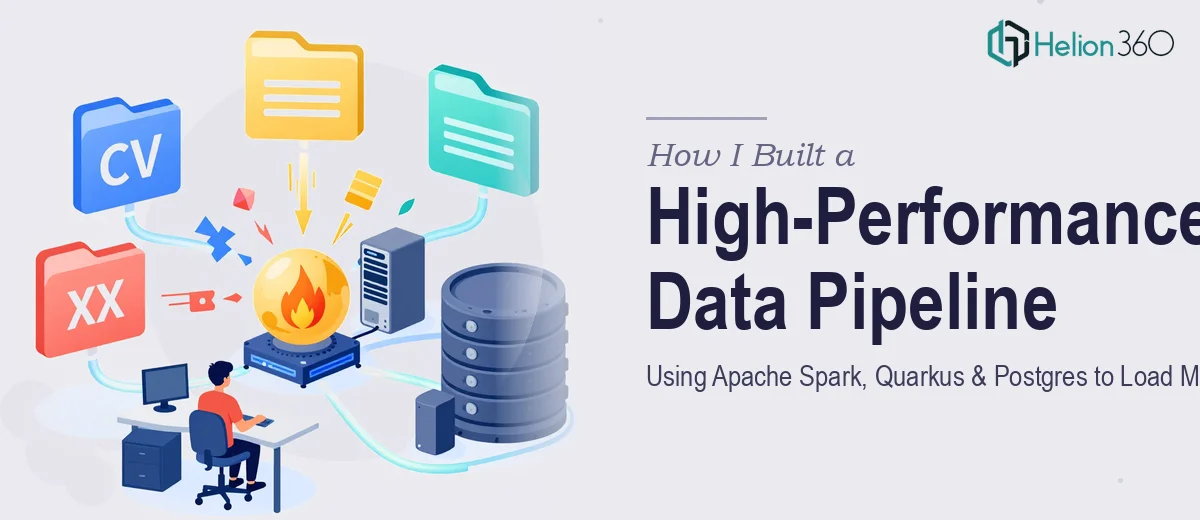
It started with a straightforward requirement — load data from CSV, TXT, and Excel files into a Postgres database. Simple enough on paper. But once I got into the details, it became clear that this was not a one-afternoon task.
The data was coming from different sources, each with its own formatting quirks. Some files were pipe-delimited, others had merged headers, and the Excel sheets had inconsistent column naming across tabs. Handling all of that in a unified, repeatable pipeline was the real challenge.
Why I Tried to Build It Myself First
I had working knowledge of Postgres and had used Python scripts before for lightweight ETL tasks. My first instinct was to write a custom loader — read each file type, normalize the schema, and push rows into the database. It worked for the CSV files. But the moment I introduced Excel files with multi-row headers and mixed data types, the script started breaking in ways I could not easily predict.
The bigger issue was performance. Once the file sizes grew past a few hundred thousand rows, the single-threaded approach became painfully slow. I needed something that could handle distributed processing — which meant Apache Spark was the right tool. But integrating Spark with a Quarkus-based backend and managing the Postgres connection pool efficiently was a different level of engineering altogether.
I spent time reading through Spark documentation, looking at Quarkus extensions, and trying to wire the pieces together. I got a working prototype, but it was fragile. Error handling was incomplete, schema inference was inconsistent across file types, and the Postgres write performance was not where it needed to be for production use.
Bringing in the Right Support
After hitting that wall, I reached out to Helion360. I explained what I was trying to build — a robust data ingestion pipeline that could accept CSV, TXT, and Excel files and load them reliably into Postgres using Apache Spark for processing and Quarkus as the application framework. Their team asked the right questions from the start: file size expectations, schema flexibility requirements, whether the pipeline needed to be batch or streaming, and how errors should be handled mid-load.
That initial conversation made it clear they had real hands-on experience with this kind of architecture, not just theoretical knowledge.
What the Final Pipeline Looked Like
Helion360's team built a structured ingestion layer around Apache Spark that handled each file format separately but fed into a common processing pipeline. For Excel files, they accounted for multi-sheet scenarios and header row detection. For TXT files, they built configurable delimiter parsing so the same code could handle different formats without modification. CSV handling included type inference and null-value normalization.
On the Quarkus side, they set up a REST endpoint to trigger ingestion jobs, managed the Spark session lifecycle within the Quarkus context, and used reactive Postgres clients to handle bulk writes efficiently. The result was a system where you could drop a file, trigger the pipeline, and have clean, structured data sitting in the correct Postgres tables within seconds — even for large files.
They also added structured logging and a basic error report that captured rows that failed validation, so nothing was silently dropped.
What I Took Away from This
The experience taught me that combining Apache Spark, Quarkus, and Postgres into a production-ready data pipeline is genuinely complex work. Each piece individually is manageable, but making them work together — reliably, at scale, across different file formats — requires deep familiarity with all three. The prototype I built would have worked for a demo. What Helion360 delivered was something I could actually run in production.
If you are working on a similar data ingestion problem — loading CSV, TXT, or Excel files into a relational database with performance and reliability as requirements — Helion360 is worth reaching out to. They take the complexity off your hands and deliver something that actually holds up under real conditions.
For similar approaches to handling complex data workflows, explore how others have tackled automated database scraping and business dataset analysis to turn raw information into production-grade systems.