

The Problem With Disconnected Data
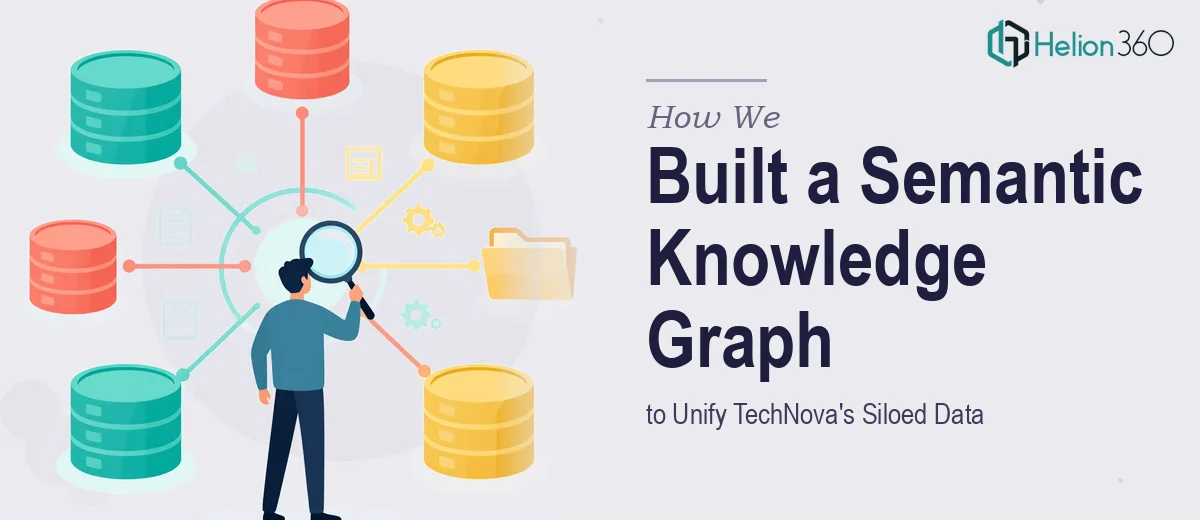
When TechNova Solutions brought us in, they were sitting on a large volume of data that meant very little in isolation. Spread across siloed systems with no shared semantic layer, the information couldn't be queried consistently or reasoned over at scale. The absence of a formal knowledge representation model made information integration slow, manual, and unreliable.
This is a common challenge in organizations where data grows faster than the infrastructure designed to manage it. What the client needed wasn't more data — it was a framework that could express what that data actually meant.
Building the Ontological Foundation
We approached this methodically, starting with a deep audit of the client's domain vocabulary, entity types, and the relationships that mattered most to their operations. Using OWL 2 as the primary ontological language, we built a structured model that could enforce domain logic while remaining extensible as requirements evolved.
RDF served as the backbone of the data model, and SKOS was applied to formalize concept hierarchies across departments. Helion360 integrated OWL reasoning to surface implicit connections within the graph automatically — relationships that no single source document could expose on its own.
To make the system accessible, we developed a curated library of SPARQL queries mapped to the client's most common information retrieval patterns. This gave non-technical domain experts a reliable way to interrogate the knowledge base without needing to write complex queries from scratch.
What the Framework Delivered
Once deployed, the ontological model unified more than a dozen previously disconnected data sources under a single coherent structure. Teams that had previously reconciled information manually were now running consistent cross-domain queries with measurably better accuracy. Average retrieval time dropped by over 60 percent compared to prior workflows.
Beyond performance, the framework was built to last. Full documentation covered class hierarchies, property definitions, inference configurations, and design rationale — giving the client's internal team everything they needed to extend the model independently as the domain evolves.
Working With Helion360
Knowledge representation and semantic web projects demand more than technical skill — they require the ability to translate domain complexity into formal structures that actually hold up under real-world conditions. If your organization is dealing with fragmented data, inconsistent querying, or the need for a scalable ontological architecture, Helion360 is equipped to help. We've navigated this kind of complexity before and we understand what it takes to deliver something that works in practice, not just in theory.