

The Problem With an Unsegmented Pipeline
When the client first reached out, their business development effort had plateaued. They had no shortage of contacts — the problem was that everything looked the same. Warm leads, cold accounts, and existing relationships were all being approached with the same messaging and the same level of effort. Predictably, results were inconsistent and the pipeline lacked direction.
The data itself was part of the problem. Records were spread across multiple sources, riddled with gaps in firmographic detail, and had never been organized around any kind of prioritization logic. Without a clear way to distinguish a high-value target from a low-fit contact, the sales team was flying blind.
Building a Framework That Actually Works
Our first move was to consolidate and audit the full dataset. We pulled records from every available source, standardized the data structure, and applied a consistent set of firmographic criteria — industry vertical, company size, revenue range, and geographic footprint — to each account.
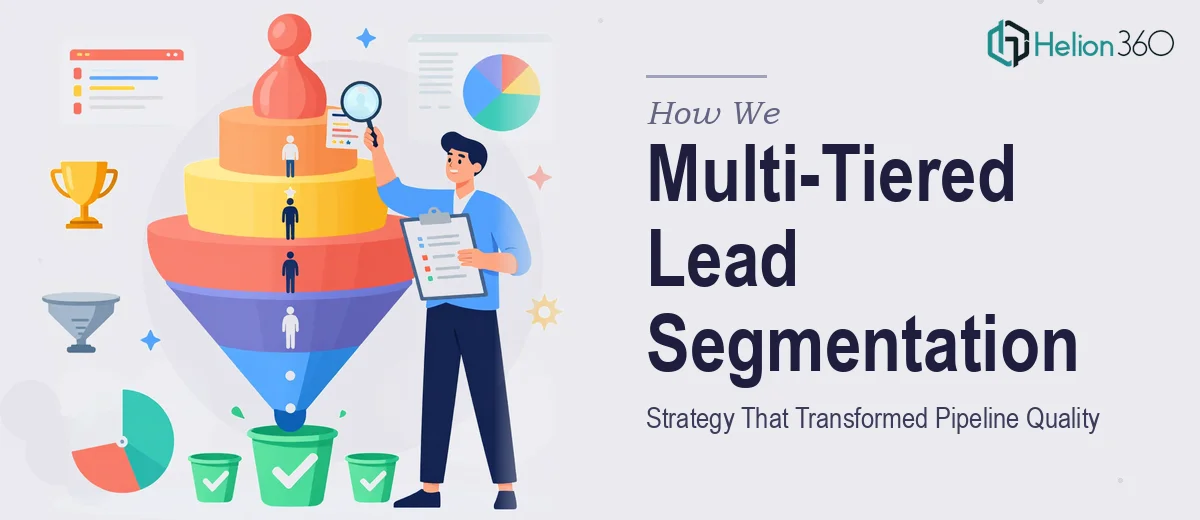
From that foundation, we built a tiered segmentation model. Accounts were grouped by fit score and estimated pipeline value, giving the sales team a clear hierarchy of where to focus. For the highest-priority tiers, we went deeper — researching decision-maker profiles, identifying organizational entry points, and documenting the context needed to personalize outreach effectively.
The approach combined structured data analysis with methodical business research, cross-referenced through manual validation to ensure the final output was accurate and actionable. Helion360 designed the segmentation logic to be transparent and repeatable, not a black box.
What the Client Walked Away With
The deliverable was a CRM-ready prospect database covering several hundred accounts, each enriched with research and assigned to a clearly defined priority tier. Alongside the data, we produced a segmentation guide that documented the classification methodology and outlined recommended outreach cadences by segment.
The impact was immediate. The sales team redirected their effort toward Tier 1 accounts and saw response rates improve in the first active outreach cycle. Pipeline reporting also became more reliable, since accounts were now consistently tagged and trackable.
The documentation we provided was detailed enough that the internal team could maintain and scale the segmentation model independently — an intentional part of how we structured the handoff.
Working With Helion360
If your pipeline is large but underperforming, the issue is often structural rather than a shortage of contacts. Helion360 takes on projects like this regularly — where the work requires both rigorous data methodology and the judgment to turn research into a usable, durable system. If you're facing something similar, we're ready to help.