

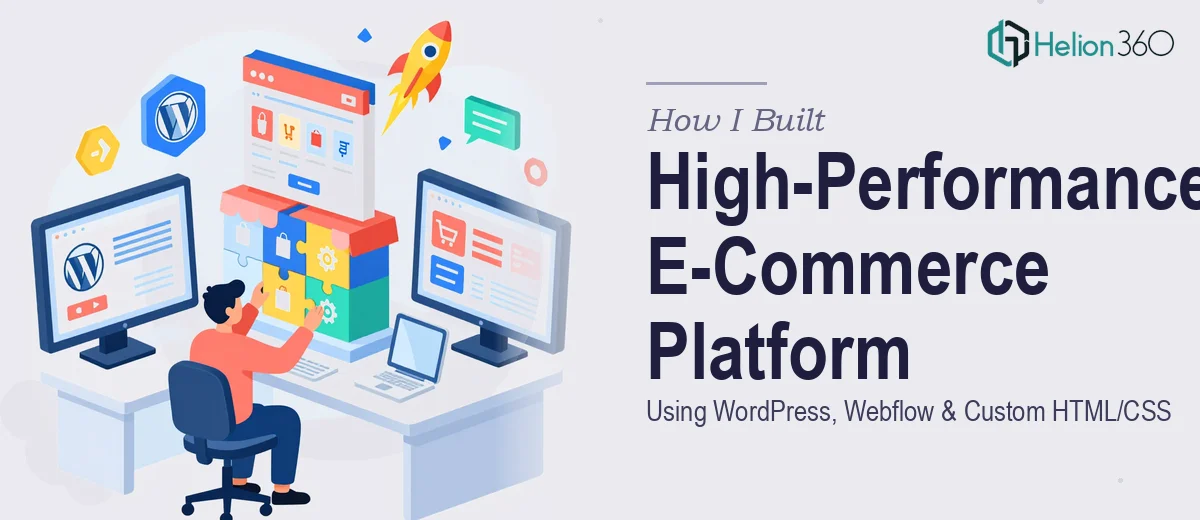
The Project That Looked Manageable at First
When I took on the task of building out an e-commerce platform, I was confident it was something I could manage. The requirements were clear enough on paper — a WordPress-based storefront, a few Webflow prototypes for landing pages, and some custom HTML and CSS work to align everything with the brand's visual identity. I had worked with these tools before, so I figured I could piece it all together without too much friction.
The first few weeks went smoothly. I set up the WordPress environment, installed the right plugins, and started mapping out the theme structure. The Webflow prototypes were coming along nicely too. But somewhere around the middle of the build, the scope started expanding.
When the Complexity Started Stacking Up
The design team kept pushing updates. The front-end needed more nuanced CSS customization than I had originally scoped. The WordPress theme development required deeper PHP logic than I was comfortable writing under a tight deadline. Meanwhile, the Webflow prototypes needed to be properly handed off and integrated with the live WordPress environment — something that sounds simple but gets messy fast when you are also maintaining product pages, checkout flows, and mobile responsiveness at the same time.
Performance optimization became its own challenge. Page speed was lagging, and I could see the Core Web Vitals numbers were not where they needed to be. Fixing that without breaking the existing custom HTML and CSS was a careful balancing act. I was spending more time troubleshooting than building, and the timeline was starting to slip.
I also realized that the documentation the stakeholders expected — detailed logs of every integration point, every template override, every responsive breakpoint — was going to take serious time on its own. A website audit at this stage could have caught many of these structural issues early.
Bringing in a Team That Could Handle It
After hitting a wall on multiple fronts, I came across Helion360. I explained where the project stood — what was built, what was broken, and what still needed to happen. Their team asked the right questions upfront and got to work quickly.
They took over the WordPress theme development and cleaned up the PHP template structure that had been giving me trouble. The custom HTML and CSS was refactored for consistency and performance, and the Webflow prototypes were properly exported and integrated into the live environment without disrupting the existing pages. They also handled the performance tuning — compressing assets, cleaning up render-blocking scripts, and making sure the site loaded fast across devices.
What I noticed most was that they worked methodically. Every change was documented. Every integration point was noted. The kind of detail that takes time when you are doing it alone was just part of their process.
What the Final Platform Looked Like
By the time Helion360 wrapped their work, the platform was in a completely different place. The WordPress and Webflow components were working as a unified system rather than two separate things running in parallel. The custom HTML and CSS was clean, well-commented, and easy to hand back to the internal design team for future updates.
The site performance numbers improved significantly. The product pages were fast, the checkout flow was smooth, and the mobile experience was consistent. The documentation was thorough enough that anyone picking up the project afterward could understand what had been built and why.
What I Took Away From This
Building a high-performance e-commerce platform is not just a development task — it is a coordination challenge. WordPress theme development, Webflow prototyping, and custom front-end work each have their own complexity, and when you layer them together under a real deadline with a live design team pushing updates, the margin for error shrinks fast.
Knowing when to bring in specialized support is not a sign that the project was too hard. It is just good judgment. The work got done properly, on time, and in a way that was sustainable for the team taking it over.
If you are in the middle of a similar build and the pieces are not fitting together the way they should, Helion360 is worth reaching out to — they are the kind of team that steps in, understands the situation quickly, and delivers work that holds up. For similar challenges, see how teams have tackled high-impact PowerPoint presentations and pitch deck redesigns for e-commerce projects.