

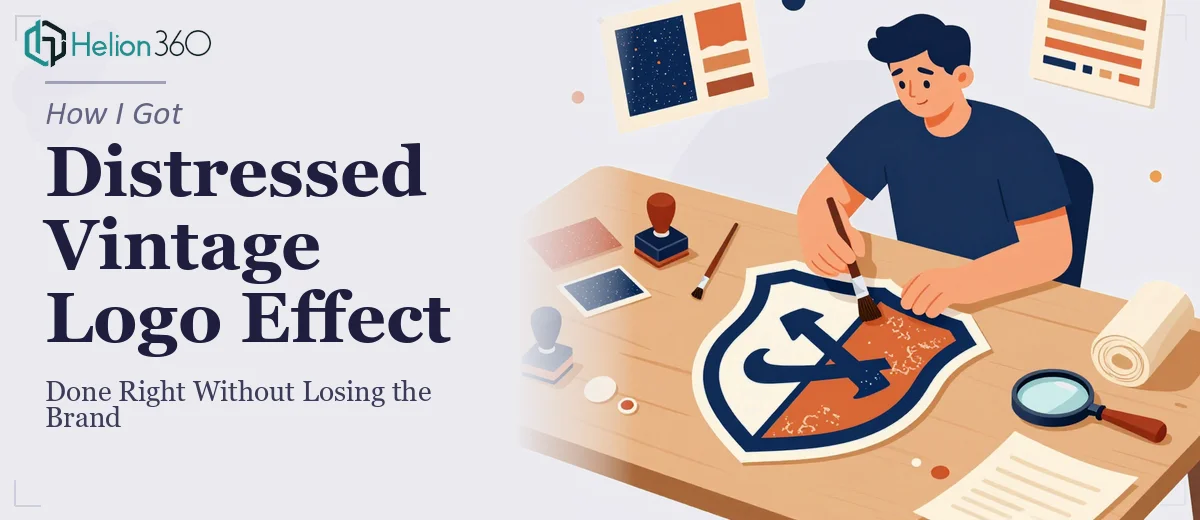
The Brand Direction Was Clear — the Execution Was Not
I'd built out a set of clean, modern logos for my small business and was genuinely happy with how they looked. But as the brand direction evolved, it became clear that the aesthetic needed to shift. The new positioning leaned into something more textured and storied — a subtle vintage feel that would feel authentic rather than like a filter slapped on top of a polished design.
The problem was obvious once I actually looked at what was needed. A distressed vintage logo effect isn't a one-click adjustment. Done badly, it can make a brand look amateurish or inconsistent. Done well, it adds character without eroding the integrity of the original mark. The branding strategy for the upcoming quarter was already taking shape, and I needed the logo system finalized before the rest of the collateral could move forward. This had to be done properly, and it had to be done soon.
What I Found the Work Actually Required
My first instinct was to think this was a texture overlay job. A few filters, some grain, maybe a color wash — done. That thinking evaporated pretty quickly once I started looking at what quality vintage logo treatment actually involves.
The first thing that became clear is that the distressed effect has to be hand-crafted to the specific logo geometry. Generic texture overlays look exactly like what they are — generic. Real vintage treatment maps the aging to where it would naturally occur on the specific letterforms and shapes, which means the work is bespoke, not automated.
The second complexity is color. Vintage aesthetics typically require desaturating and shifting the palette toward earthy, muted tones — but doing this in a way that still reads clearly in print and digital contexts requires careful judgment. A color shift that looks right on screen can fall apart in certain print conditions.
The third issue is format. The final artwork needs to work in both vector and raster forms, which means the effect has to be constructed in a way that scales without degrading. That's a very different technical challenge than producing a single raster export.
What Doing This Well Actually Involves
The foundational work is a detailed audit of the existing logo geometry before any effect is applied. The practitioner needs to understand which elements are structurally load-bearing — the parts of the mark that carry brand recognition — versus which elements can absorb distress without compromising legibility. A well-executed vintage logo effect typically applies more wear to secondary elements like borders, fills, and decorative details, and protects the core mark. Getting this mapping wrong means the logo starts to lose its identity under the effect. This analysis alone takes time, and skipping it produces results that feel random rather than considered.
Visual mechanics for the distress layer itself involve building custom texture masks rather than applying stock overlays. Authentic vintage treatment uses variable erosion — heavier at edges, lighter at centers, with irregular ink-loss patterns that mimic genuine aging. The color palette work runs in parallel: a proper vintage shift typically moves primary brand colors toward warmer, slightly desaturated equivalents while maintaining enough contrast to meet readability standards across backgrounds. Building this out across a set of logo variations, rather than a single mark, compounds the complexity significantly.
The final layer is format integrity. Delivering in both vector and raster formats means the effect needs to be constructed so that it survives scaling from a small social profile image to a large-format print application. Raster textures embedded in vector files can behave unpredictably at extreme scales, so the practitioner needs to build and test at multiple output sizes before finalizing. Documentation of every change — which elements were modified, what color values shifted, how the distress was weighted — has to be produced alongside the files so the client can brief any future designer accurately.
Why I Brought in Helion360 to Handle It
Once I understood what this actually required, I knew immediately that attempting it myself wasn't realistic. The combination of design judgment, technical format knowledge, and the time needed to do it to a professional standard wasn't something I had available heading into a busy quarter.
Helion360 handled the full project end-to-end — from auditing the existing logo artwork and mapping the distress treatment to delivering the final files in both vector and raster formats with full change documentation. They turned it around quickly, in a matter of days, which meant the rest of my branding work could stay on schedule. What would have taken me weeks of learning, iteration, and probable rework was handled in a fraction of that time by a team that does this work every day with the tooling already in place.
The result came back polished, consistent across all logo variants, and ready to deploy across print and digital materials without any additional cleanup.
What I'd Tell Anyone Looking at the Same Problem
The finished logos looked exactly like what I'd been trying to describe — authentic, textured, and distinctly vintage without being heavy-handed. The subtle color shifts gave the marks a warmth they didn't have before, and the distress felt earned rather than applied. More practically, having both vector and raster formats delivered with proper documentation meant the files integrated cleanly into every part of the brand system without complications.
If you're sitting on clean logo artwork and trying to figure out how to give it a genuine vintage character without losing what makes it work, the execution is more involved than it appears. The design judgment, technical construction, and format requirements add up fast. Similar challenges emerge when converting complex design files or managing brand-consistent presentation design.
If you're in the same spot and want it handled properly and quickly, Helion360 is the team to engage — they delivered the full project end-to-end, fast, with the kind of execution depth this work genuinely needs.