

When the Chat Never Stops Moving
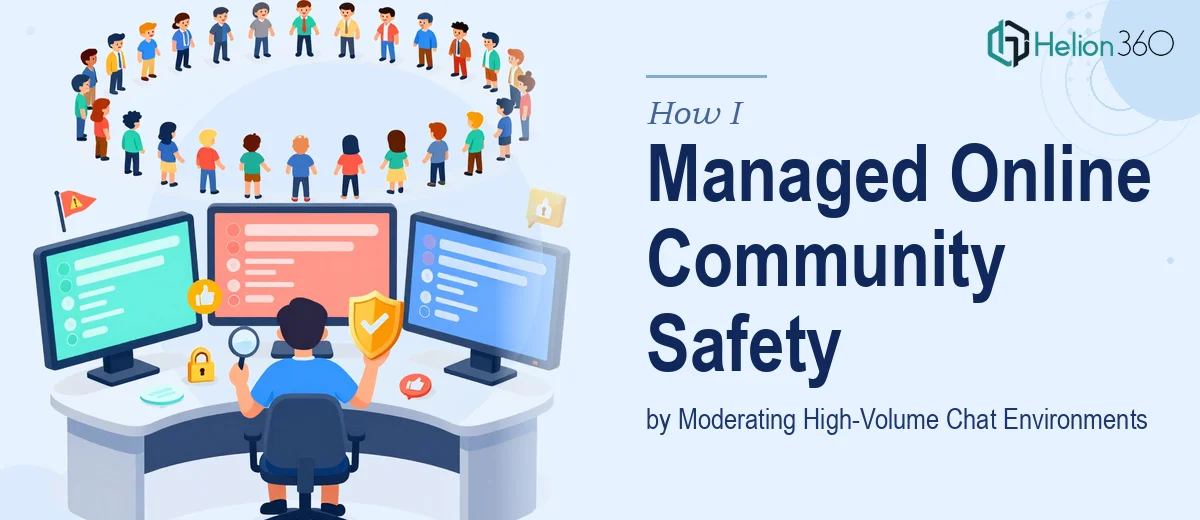
I took on a chat moderation role for a growing online community that was pulling in hundreds of messages an hour. At first, I thought it would be straightforward — read the messages, flag anything inappropriate, keep the conversation healthy. Simple enough on paper.
Within the first few days, I realized just how demanding high-volume chat moderation actually is. The volume was relentless. Conversations overlapped, context shifted fast, and some of the most problematic messages were buried between dozens of harmless ones. Missing even one could mean a user had a bad experience or that harmful content stayed visible longer than it should have.
The Real Complexity Behind Chat Moderation
Most people assume chat moderation is just about removing offensive language. In practice, it goes much deeper than that. I was navigating nuanced situations — users testing the rules without technically breaking them, context-dependent messages that required judgment rather than a checklist, and sensitive topics that needed careful handling rather than a hard delete.
On top of that, I was expected to maintain a consistent tone in my own responses. When redirecting a conversation or warning a user, the language had to be calm, clear, and fair. Excellent English communication skills were not optional — they were the entire job. A poorly worded response from a moderator often created more conflict than the original message it was addressing.
I built out my own reference notes — phrases that worked, patterns to watch for, situations that needed escalation. But even with that, I kept running into gaps. My system was reactive. I was spending so much time keeping up with the live stream that I had no bandwidth to think structurally about how to make the moderation process more sustainable.
Bringing in Outside Support
After hitting a wall with the operational side, I came across Helion360. I was not looking for someone to take over entirely — I needed help organizing my moderation framework into something more visual and communicable, especially because I was working as part of a small team and we needed shared documentation.
I explained the problem: we had moderation guidelines that lived in my head and in a rough text document, but nothing that could be handed to someone else and understood quickly. Their team took it from there. They helped structure the process into a clean, visual format — something that could work as an onboarding reference and a day-to-day operational guide.
What Changed After Getting That Structure
Having a structured visual document changed how the whole team operated. New moderators could get up to speed without needing a long walkthrough. Escalation paths were clear. The tone guidelines were written out in plain language so everyone responded consistently, not just me.
The moderation work itself became more manageable because I was no longer the single point of reference for every judgment call. The documentation held that weight instead. Response times improved, edge cases were handled more consistently, and the community environment became noticeably more stable.
I also stopped second-guessing my own decisions as often. When the guidelines are clear and accessible, you make faster calls and feel more confident in them. That alone reduced a significant amount of daily stress.
What I Would Tell Anyone Stepping Into Chat Moderation
Chat moderation in a high-volume environment is a serious communication and judgment-based role. The English language skills required go beyond grammar — you need precision, tone awareness, and the ability to de-escalate with words alone. That takes practice and a clear framework behind it.
Documentation is not optional. Whether you are a solo moderator or part of a team, having your moderation process written down in a format others can read and act on is what separates a reactive workflow from a reliable one. The work is invisible when it is done well, and that invisibility is only possible when the system underneath it is solid.
If you are building out a moderation process or need to turn a rough internal workflow into something structured and shareable, Helion360 is worth reaching out to — they handled the documentation side cleanly and delivered exactly what the team needed.