

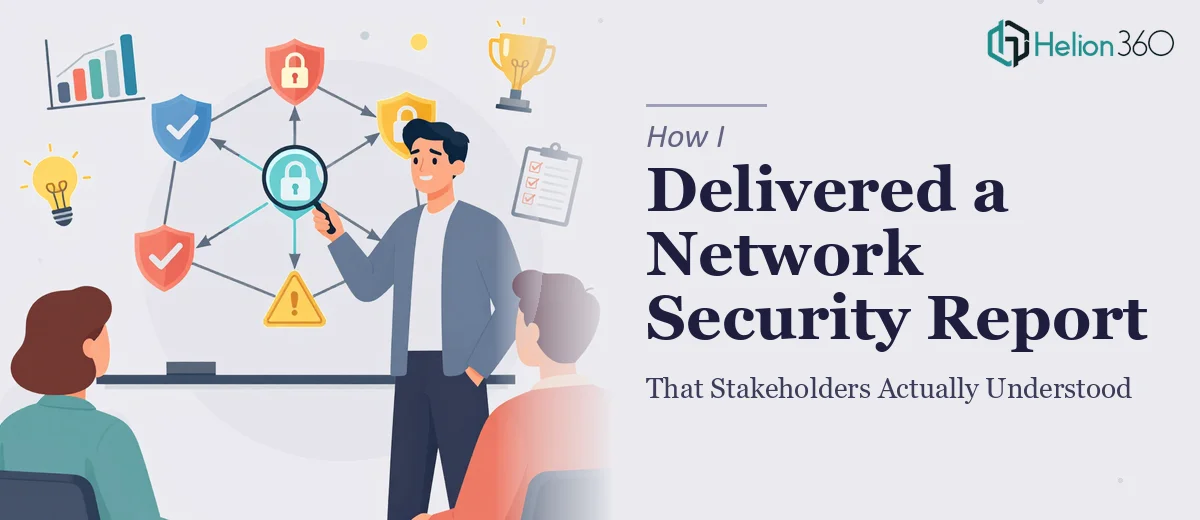
When the Report Was Done But the Work Was Not
After several months of work, the network security report was finally complete. It covered our current infrastructure, identified potential vulnerabilities, and laid out a detailed set of recommendations. On paper, it was thorough. In practice, it was dense, technical, and structured for engineers — not for the leadership team and stakeholders who needed to act on it.
That gap between what the report said and what the audience could actually absorb was the real problem I was staring at.
The Challenge With Technical Security Content
Network security reports tend to be written in a very specific way. They are precise, data-heavy, and built for accuracy — not for quick comprehension. Concepts like attack surface analysis, patch compliance rates, and firewall configuration gaps are meaningful to a security team but can lose a boardroom audience in the first few minutes.
I knew the findings mattered. The vulnerabilities we had identified were real risks. The recommendations were actionable. But presenting this content in raw report form was not going to drive the urgency or the decisions we needed.
I tried restructuring the report myself, pulling out key sections and building a rough slide deck. I ran into two problems quickly. First, I kept second-guessing what a non-technical stakeholder would understand versus what needed more context. Second, the visual side of the presentation was not reflecting the seriousness of the content — it looked like a formatted document, not a professional presentation.
Bringing in the Right Support
After hitting that wall, I reached out to Helion360. I explained the situation: a completed security report, a stakeholder audience with varying levels of technical familiarity, and a need to translate the findings into a clear, well-designed presentation that would actually drive decisions.
Their team took the brief seriously from the start. They asked the right questions — who the audience was, what decisions needed to come out of the presentation, which findings were highest priority, and what tone the organization used in executive communications. That level of scoping made it clear this would not be a generic template job.
How the Presentation Came Together
What Helion360 delivered was a structured narrative built around the report's three core areas: the current security posture, the identified risks and their potential impact, and the recommended next steps. Each section was designed to build on the last, so the audience could follow the logic without needing a cybersecurity background.
The vulnerability data was visualized in a way that showed severity and priority clearly — not just as a list of technical findings but as a risk picture stakeholders could interpret at a glance. The recommendations were framed with business context, connecting each action to an outcome the leadership team would care about, whether that was reduced exposure, compliance alignment, or operational continuity.
The slide design itself was clean and professional, with consistent formatting that gave the presentation weight. It did not look like an internal document dressed up in PowerPoint — it looked like a deliberate, polished communication.
What the Presentation Actually Achieved
When the presentation went in front of stakeholders, the response was different from what previous technical briefings had produced. People engaged with the content. There were questions about specific risks, about timelines for the recommendations, and about resource requirements. That kind of conversation only happens when the audience understands what they are looking at.
The network security report had always contained the right information. The missing piece was a performance report presentation design layer that translated that information into something a mixed audience could process and respond to.
This experience reinforced something that is easy to overlook: producing the analysis is only half the work. Communicating it effectively — especially when the stakes are high and the audience is not technical — requires its own set of skills.
If you are sitting on a completed security report or any complex technical document and need help turning it into a data-driven presentation your stakeholders will actually follow, Helion360 is worth a conversation — they handled the translation from report to boardroom-ready deck in a way that made a real difference.