

The Challenge
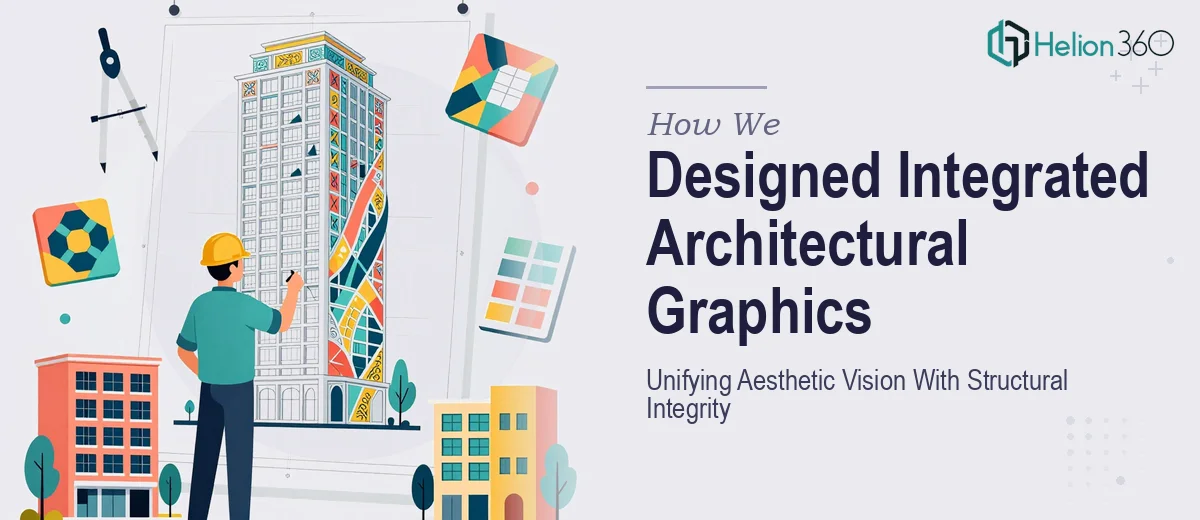
The client came to us with a project that demanded more than surface-level graphic design — they needed a creative partner who could operate at the intersection of architecture and visual communication. The core challenge was ensuring that graphic design elements did not simply sit on top of architectural concepts, but instead emerged from them. Buildings and structures carry inherent visual logic — proportion, material, spatial rhythm — and any graphic language layered onto them had to respect and reinforce that logic. The client required someone fluent in both digital and physical design thinking, capable of translating structural blueprints into compelling visual art without losing functional clarity. Handling color theory, typography, and composition in a way that aligned with the demands of physical space — rather than just a screen or printed page — added a meaningful layer of complexity.
Our Approach
Helion360 began by conducting a thorough review of the client's architectural documentation and existing visual references to understand the structural and spatial context driving the project. Rather than imposing a pre-built design language, the team developed a visual system grounded in the building's own geometry, materiality, and spatial logic. Color palettes were selected to complement both interior and exterior conditions, while typographic choices were tested across scales to ensure legibility and harmony in physical environments. Composition principles were applied with a spatial awareness typically reserved for environmental design, ensuring that each graphic element felt native to its architectural context rather than decorative afterthought. Close collaboration with the client's architects and engineers was maintained throughout the process to validate that all design decisions held up against structural and functional requirements.
The Outcome
The engagement produced a cohesive suite of integrated architectural graphics that successfully bridged the gap between structural design and visual identity. Every deliverable — from environmental signage concepts to presentation-ready design visuals — reflected a unified aesthetic that honored both the building's physical integrity and the client's creative vision. The client received assets that were immediately usable across digital presentations and physical production contexts, with a clear design rationale documented to support future implementation by their engineering and construction teams.
Helion360 brings the same rigor and cross-disciplinary thinking to every project where design and architecture intersect — if you're working on a similar challenge, we'd be glad to explore how social media engagement graphics and AI-powered ad graphics can enhance your visual communication strategy.