

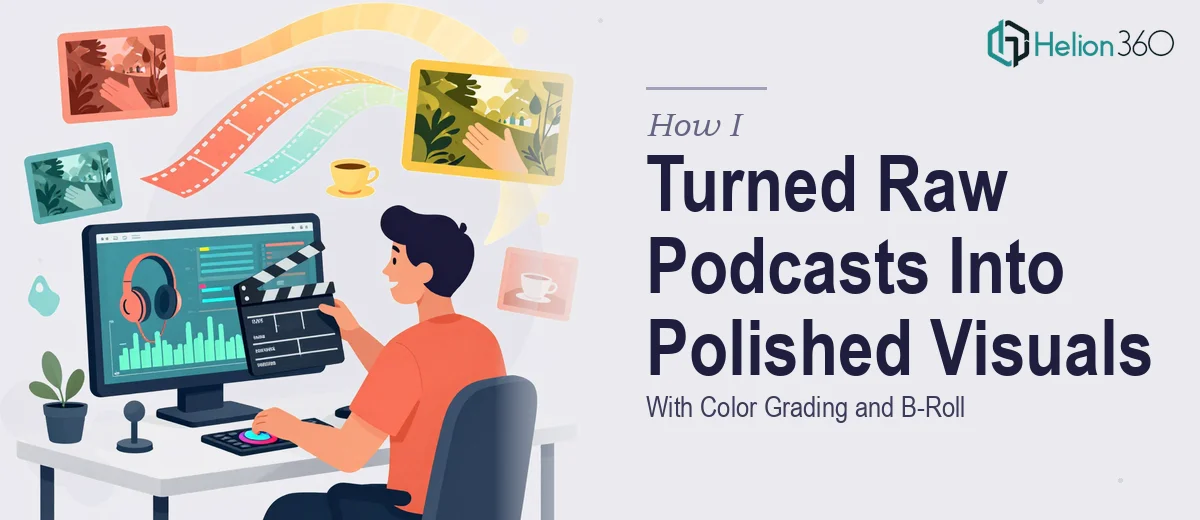
Starting With a Spreadsheet and No Clear Path Forward
I had a growing list of podcast episodes tracked in an Excel sheet — titles, timestamps, guest names, notes on tone, and rough ideas for visuals. On paper, it looked organized. In practice, it was a pile of raw recordings waiting to become something presentable.
The goal was straightforward: take these recordings, apply proper color grading to the video footage, and layer in B-roll that matched the context of each conversation. The kind of output that looks clean on YouTube, holds attention on social media, and actually reflects the quality of the content inside.
I figured I could manage it. I had basic video editing tools and some familiarity with the process. What I underestimated was the scale.
Where the Process Started Breaking Down
Color grading is one of those things that looks simple until you're staring at inconsistent lighting across twelve different episodes recorded in different environments. One episode had warm indoor lighting, another was shot near a window with harsh daylight, and a few had that flat, ungraded look that makes even good content feel amateurish.
Matching tones across episodes while keeping a consistent visual identity for the show took far more time than I had budgeted. And the B-roll was its own challenge entirely. Finding relevant footage, syncing it to the right moments in the conversation, cutting it so it felt natural rather than pasted in — each episode became a multi-hour project on its own.
With multiple episodes in the queue and a fast-moving production schedule, I was falling behind. The Excel sheet was getting longer. The backlog was growing.
Bringing in the Right Team
After a few days of slow progress and one episode that still did not look right after several rounds of revision, I reached out to Helion360. I explained the setup — the Excel tracking sheet, the volume of episodes, the color grading inconsistencies, and the B-roll requirements for each one.
They asked the right questions from the start: What was the visual tone I was going for? Were there reference episodes or shows I wanted to match? How was the B-roll supposed to function — illustrative, atmospheric, or directly tied to spoken content? That level of specificity told me they had actually done this kind of work before.
What the Delivery Looked Like
Helion360's team took over the production queue and worked through the episodes methodically. The color grading was applied with a consistent look across all episodes — not identical, because the source footage varied, but cohesive enough that the whole series felt like it belonged together. The flat, washed-out recordings came back looking intentional and professional.
The B-roll integration was handled with real editorial judgment. Rather than just inserting stock footage at random intervals, the team matched visuals to what was actually being discussed. When a guest talked about urban infrastructure, the cut went to something that made visual sense. When the tone of the conversation shifted, the B-roll reflected that shift.
Working from the Excel sheet as a production reference, they tracked progress episode by episode, which made review much easier on my end. I could see where each episode stood, flag anything I wanted adjusted, and move through approvals without confusion.
What I Took Away From This
Podcast post-production looks manageable when you are dealing with one or two episodes. When you are working through a full batch with varying footage quality, multiple B-roll requirements, and a consistent visual standard to maintain across all of them, the complexity compounds quickly.
Color grading alone requires a trained eye and enough time to iterate. B-roll requires editorial judgment, not just access to a footage library. Both require someone who can work efficiently under a production schedule without cutting corners.
The experience also changed how I think about visual storytelling for audio-first content. Good B-roll and proper color grading are not cosmetic additions — they are part of how the audience receives the content. Done well, they keep viewers watching. Done poorly, they create friction.
If you are managing a podcast production backlog and finding that color grading and B-roll are eating more time than the recording itself, Helion360 is worth a conversation. They handled exactly the kind of multi-episode, detail-heavy workload that had stalled my production schedule.